

How To Update Sound Drivers Windows 8
Z7_3054ICK0KGTE30AQO5O3KA30N0
hp-concentra-wrapper-portlet
 Actions
HP Desktop PCs - No Sound from the Speakers (Windows 8)
This certificate applies to HP and Compaq desktop computers with Windows 8.
The steps in this certificate describe how to troubleshoot and fix the problem when there is no sound coming from the speakers.
Before you begin: Restart the computer
If there is no sound coming from the audio device continued to your computer, the issue might be caused by an application controlling that device and preventing other applications from using it. Earlier attempting the other troubleshooting procedures in this document, restart your estimator, and and so test the audio to run across if the problem is fixed.
Pace 1: Use the Troubleshooting tool
The Troubleshooting tool in Windows eight can automatically fix common problems with your figurer, such as audio recording. Although it may not fix every trouble, information technology is useful to run the Troubleshooting tool outset before you manually correct problems.
Watch a video on using the troubleshooting tool in Windows 8

To open up the Troubleshooting tool:
-
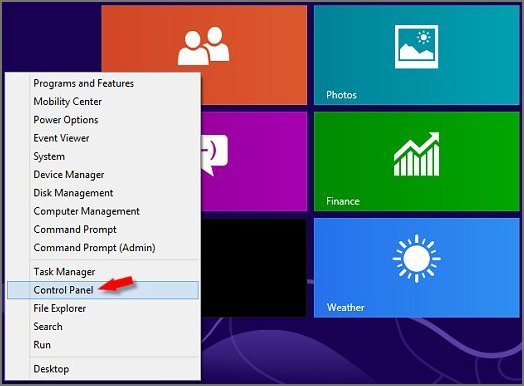
Move the mouse pointer to the lower left corner of the screen, right-click, then select Control Panel from the card.
Figure : Control Panel
-
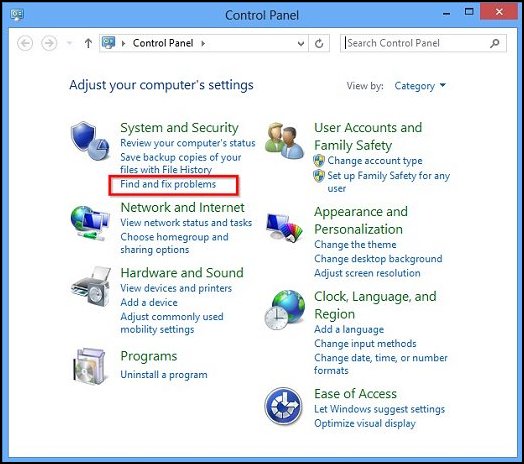
Under Arrangement and Security, click Find and fix issues.
Effigy : Find and prepare problems
-
Click Hardware and Audio.
Figure : Troubleshooting Hardware and Sound
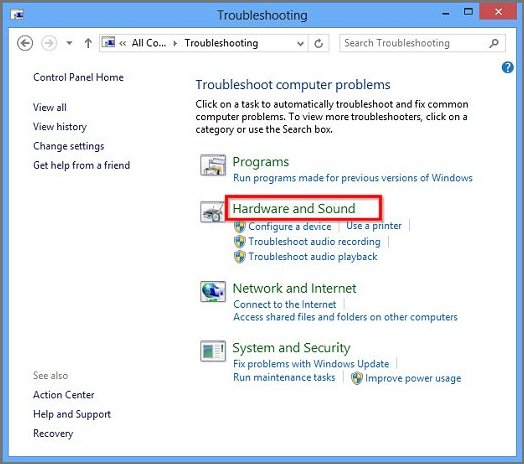
Troubleshooting sound recording and sound playback
-
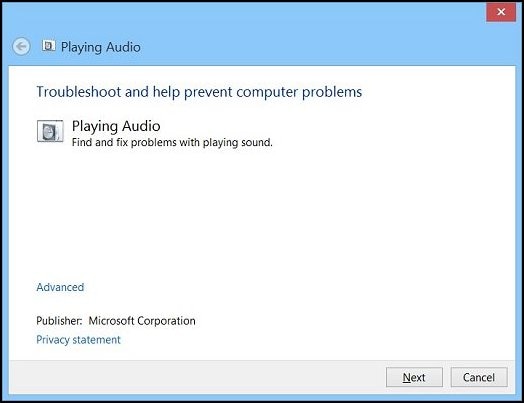
Click Playing audio or Recording audio, and click Next.
Figure : Recording Sound
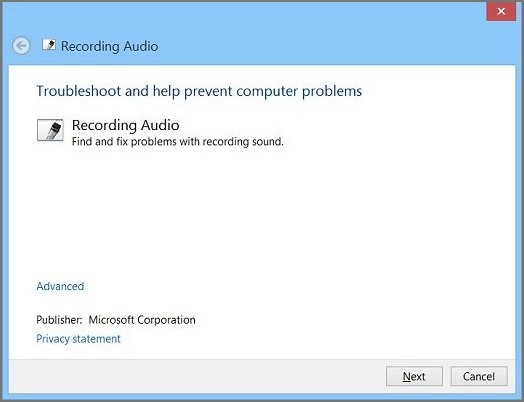
Figure : Playing Sound
-
Select the device you lot want to troubleshoot and click Next.
-
Wait while the troubleshooter detects problems and makes changes.
Figure : Detecting problems

-
When the troubleshooter is done, the Troubleshooting has completed page displays listing any problems found and what changes were made to the computer.
notation:
For detailed information about the troubleshooting chore, click View detailed information.
Click Close.
Figure : Troubleshooting completed

If a recommended action displays, select Employ this fix or Skip this step to continue to search for other problems. If your problem has not been resolved, check for sound from headphones.
Step 2: Check for sound from the headphones
Two types of headphone connectors are bachelor on HP computers. One supports only sound to the headphones, and the other supports audio to the headphones and the use of a microphone. The connectors are marked with symbols next them.
-
Connectors on the computer marked with a headset only
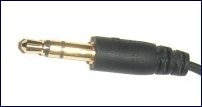
 , support output sound only and work with a standard 3-pin headphone or a iv-pivot headphone, for sound.
Figure : Standard three-pivot plug
-
Connectors on the computer marked with a headset with a microphone
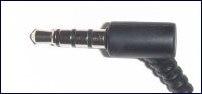
 , back up sound and the use of a microphone when used with a headset with a iv-pivot plug and a microphone.
Figure : Four-pivot plug
To hear sound, either plug may be used with either connector. Using a iv-pin plug that is capable of supporting a microphone in a iii-pivot connector allows sound to be heard, but the microphone does non work because the figurer's three-pin connector does non support a microphone.
Footstep three: Check volume and mute settings in Windows 8
The book setting for one or more sound devices might exist disabled or fix as well low. There are several things that can change audio book: the volume control knob for your speakers or monitor, Windows volume controls, and book controls in sound software. If whatever of these book controls are muted or set up likewise low, the unabridged sound feel is affected.
Watch a video on checking volume and mute settings in Windows 8
-
If your powered speakers have a volume control knob, fix information technology to halfway.
Figure : Volume control knob for speakers (your speakers might be different)

If you are using speakers that are built into your monitor, make sure sound is enabled for the monitor and volume is gear up to halfway. Suit the sound settings for your monitor by using the buttons on the monitor and/or the on-screen card. To detect more specific information most using and adjusting your monitor speaker settings, encounter the support documentation that came with your monitor.
Effigy : Volume and carte buttons on a monitor (your monitor might exist different)

-
Move the mouse pointer to the lower left corner of the screen, right-click, and select Control Panel from the card.
Figure : Command Panel
-
Click Hardware and Sound. Nether Sound, click Adjust system volume.
Effigy : Adjust organization volume
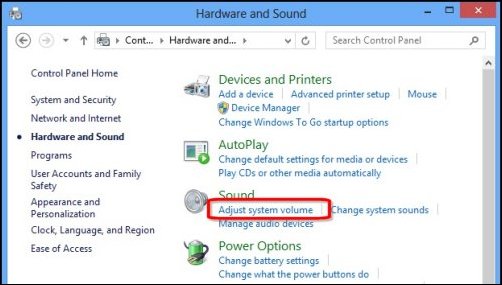
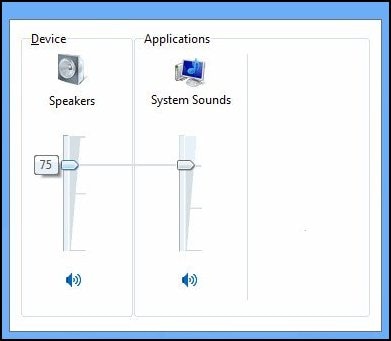
Figure : Volume Mixer
-
Make certain the volume is not muted by looking at the foursquare Mute buttons beneath the volume slider. If the button displays a minor red circle, the volume is muted.
If the book is muted, click the Mute button to enable sound. The crimson circle on the speaker icon disappears when sound is no longer muted.
Audio muted
Audio not muted


-
After verifying that the sound is not muted, elevate the book adjuster up until it is at 75%.
-
To examination, click the book slider bar. If you hear a ding sound from all speakers, you lot are finished troubleshooting.
Figure : Testing book

If you still do not hear whatsoever audio, set the default speakers and exam them.
Stride 4: Set the default speakers and test them in Windows viii
Use the following steps to set and test the default speakers.
Picket a video on setting default speakers and testing sound in Windows 8
-
Move the mouse pointer to the lower left corner of the screen, right-click and and then select Command Panel from the carte.
Figure : Control Panel
-
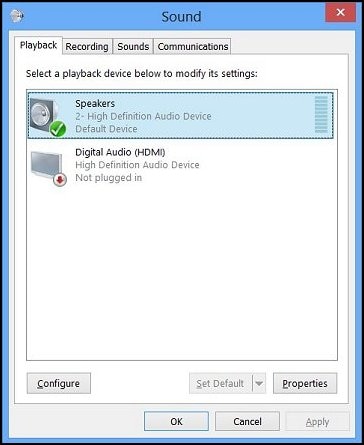
Click Hardware and Audio, and then click Sound.
Figure : Sound Settings
-
If headphones are connected and y'all are not using them as your main speakers, disconnect the headphones at present. Connecting headphones to the estimator mutes other speakers.
-
Find your connection type. If you lot accept more than i connection type, such every bit HDMI and Speakers, so choose the connexion type you want to use.
Speakers

If you are using typical computer speakers or headphones (analog sound devices), make sure Speakers is selected. This is the most mutual sound setup for a desktop reckoner environs and includes many types of headphones, desktop speakers, 5.1 and 7.1 sound systems. Many monitors with built-in speakers likewise support a speaker connection using a separate audio cable continued from the computer to the monitor (non an HDMI connection).
Digital Output

If you want to transport all sound from the computer to digital speakers or a stereo digital device, make sure the playback device labeled with Digital Output is selected.
HDMI

If your computer has an HDMI connection and you are trying to use the speakers in a Tv set or monitor, brand sure the playback device labeled with HDMI is selected.
-
In the Audio window, select your Playback Device and click the Ready Default push button.
Figure : Set Default

-
With the default Playback Device selected, click the Configure button.
-
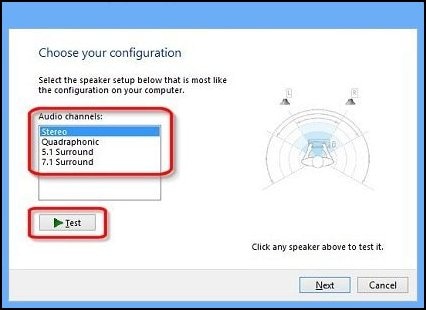
Click your speaker setup in Audio channels.
Figure : Speaker Setup window with five.1 Surround (five speakers and a subwoofer) selected
-
Click the Test push to send sound to each speaker, or click an individual speaker to transport audio to information technology.
-
If sound is heard correctly from each speaker, you lot are finished.
If sound is missing from all or i of the speakers, or if the configuration type was changed, keep with speaker setup by clicking Adjacent. Follow the on-screen instructions to complete the speaker setup.
Play a audio. If audio problems go on, cheque the speaker connections.
Footstep v: Check speaker connections in Windows 8
Use these steps to make sure you have the speaker cables connected to the correct audio connectors.
Sentry a video on checking the speaker connections in Windows viii
-
Move the mouse pointer to the lower left corner of the screen, right-click then select Control Panel from the menu.
-
Click Hardware and Audio, and and then click Sound.
Figure : Audio Settings
-
The Speaker Properties window contains a list of color-coded connectors that corresponds to each pair of speakers. Use this information to determine which connector goes with the speaker pairs that you are using.
Figure : Speaker Properties window for 7:1 Environment setup

The example shown in the epitome is for a 7.1 Surround setup, where:
-
50 R (green, Line Out) is for the front end left and right speaker pair (the green connector, ordinarily labeled Line out).
-
RL RR (orangish) is for the Rear-left and Rear-right speaker pair.
-
C Sub (black) is for the Centre or Subwoofer speaker.
-
SL SR (gray), is for Side Left and Side Correct speakers
-
-
Make certain each speaker cable is continued to its respective connector on the back of the computer. The colors shown in the Speaker Properties window match the connector color on the figurer.
-
If you have 5.i or greater speakers, connect the speaker cables to the speaker hardware (usually on the subwoofer). And then match the speaker cablevision to the connectors on the computer using the colors shown in the Speakers Property window.
-
Play a sound. If you still exercise not hear any audio, cheque for audio from headphones.
Pace half-dozen: Bank check for sound from headphones
If there is yet no audio, check for sound output using headphones.
Watch a video on checking for sound from the headphones in Windows viii
-
Observe and unplug all audio cables from the back of the reckoner.
-
Plug the headphones directly into the speaker out connector on the back of the reckoner. The speaker out connector might have a symbol of a speaker or a circumvolve with an arrow pointing out, or it might be labeled every bit OUT.
-
Test for sound in Windows. Double-click the book icon in the taskbar, and and so click the volume control slide in the Volume Mixer.
Figure : Testing volume
Each time y'all click the master volume slide bar, you should hear a beep audio through the headphones.
-
If y'all hear sound through the headphones, the sound hardware on the computer is working, and the consequence is probably related to the speakers or speaker cables. Disconnect the headphones and reconnect the speakers.
When washed, examination again for sound using the same steps as above with the volume command slider. If audio withal does not work correctly after reconnecting the speakers, endeavor replacing the speaker cablevision (if possible), or speaker fuse and exam over again.
-
If you cannot hear sound through the headphones, make sure that you are connecting the headphones into the correct connector, and endeavor again. If there is nonetheless no sound, continue to the next step when you are sure the headphones are continued to the correct audio connector on the back of the computer.
-
Microphone connector or Center/Subwoofer Out
-
Forepart speaker connector (to front powered speakers or headphones)
-
Line-in or Rear speaker Out
Figure : Figurer with 3 rear sound connectors

-
Side speaker out
-
Rear speaker out
-
Middle and subwoofer out
-
Microphone
-
Line-out (to front end powered speakers or headphones)
-
Line-in
Effigy : Reckoner with 6 rear audio connectors

-
Step 7: Restore the audio driver in Windows 8
Sound files and settings that become changed tin can cause sound problems. Restore the audio driver to reset sound settings for the sound hardware and reinitialize the audio configuration in Windows.
notation:If the computer was upgraded to Windows Vista before being upgraded to Windows 8, y'all might non exist able to use all the features of an integrated audio device that is compliant with Audio Codex '97 (AC '97) specifications. To resolve this, update the sound driver. Meet Step viii: Updating the audio driver.
To roll back to the previously installed commuter through the Device Director, complete the following steps.
Watch a video on restoring the sound driver in Windows 8
-
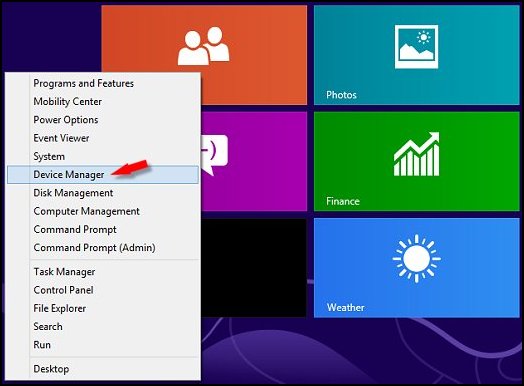
Movement the mouse arrow to the lower left corner of the screen, correct-click, select Device Manager from the menu.
Figure : Device Manager
-
Double-click Sound, video and game controllers.
-
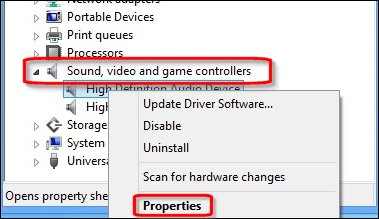
Correct-click the proper noun of the sound device and select Properties.
Figure : Device Manager sound device backdrop
-
Click the Commuter tab.
annotation:
Sound devices will vary depending on the configuration of your computer.
-
Click Roll Back Driver.
Effigy : Instance audio device properties - The sound devices on your computer may be different.

-
Click Yes to roll back to the previous driver.
-
Test for audio.
If in that location is still no audio, update the audio driver.
Step viii: Update the audio driver
An updated audio commuter might resolve the problem if the computer is experiencing sound issues after upgrading the operating system to Windows viii, or the computer is experiencing sound problems in a detail software program.
Updating the audio commuter using Device Manager
Update the audio driver using Device Manager as follows:
-
Move the mouse pointer to the lower left corner of the screen, right-click, select Device Manager from the menu.
-
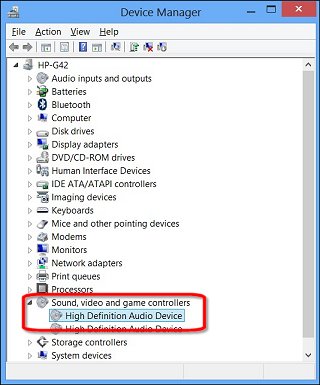
Double-click Sound, video and game controllers.
Figure : Audio devices in Device Manager
-
Correct-click the name of the audio device listed under Sound, video and game controllers.
-
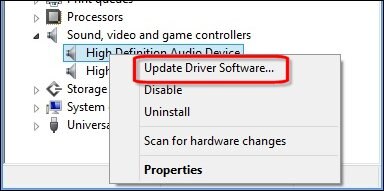
Select Update Driver Software.
Figure : Update Driver Software selection in Device Director
-
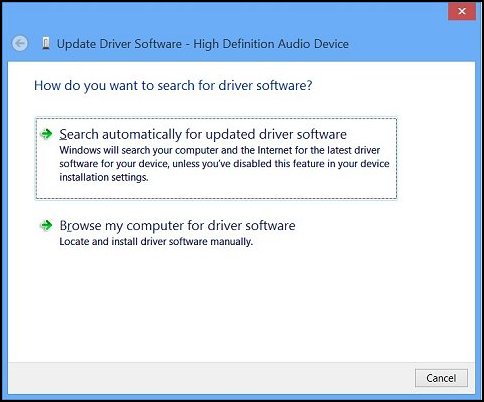
Click Search automatically for updated commuter software.
Effigy : How practise you lot want to search for driver software
-
Windows checks for and installs any updated drivers found. The Window displays whether the estimator already has the latest available driver or if Windows was able to successfully update the sound driver.
Figure : Windows has successfully updated your commuter software

-
If a window opens that asks you to restart the computer, restart the calculator.
-
If you cannot observe a commuter from HP, download and install an updated audio driver packet from the sound applied science provider.
notation:
Your calculator probably uses Realtek Audio Codec, or Integrated Device Technology software. Download and install audio drivers from one of the following sites:
-
Integrated Device Technology (IDT) Audio Products Web page (in English)
-
Realtek'southward Downloads Web page (in English)
-
Test for sound. If sound problems persist or no drivers could exist found and installed, check Device Director.
Pace 9: Cheque Device Manager in Windows viii
If you cannot hear sound, cheque Device Manager to decide the land of the sound hardware.
Sentry a video on checking Device Manager in Windows 8
-
Motility the mouse pointer to the lower left corner of the screen, right-click, select Device Manager from the menu.
Figure : Device Manager
-
Double-click Audio, video and game controllers.
-
Do the following, depending on what displays:
-
If a audio device is not listed and the estimator uses a sound carte, reseat the sound card into the motherboard slot. Go to the next step if problems go along.
-
If a sound device is listed with a downwards arrow, the device is disabled. Correct-click the sound device proper name and select Enable to re-enable the device. Go to the next pace if problems proceed later enabling the device.
Figure : Enabling a disabled audio device

-
If a sound device is listed, correct-click the device proper name and select Backdrop to view more helpful troubleshooting information in the Device Status window. If Device Status shows that the device is working correctly, the problem is probably related to audio settings, the speakers, or the cables.
-
Step x: Run the Audio examination from the HP PC Hardware Diagnostics (UEFI)
The Hardware Diagnostics Audio Playback Test checks your organisation to make sure the audio device is performance properly and tests the functionality of the audio subsystem, including sound controllers and codecs.
Use the following steps to run the HP PC Hardware Diagnostics (UEFI) Audio Examination. During the test, a few music notes are played in sequence and and then repeated. This test takes 1 infinitesimal to consummate for each audio output port.
-
Hold the ability push for at least five seconds to turn off the estimator.
-
Plough on the estimator and immediately printing the F2 key repeatedly, nigh once every second.
-
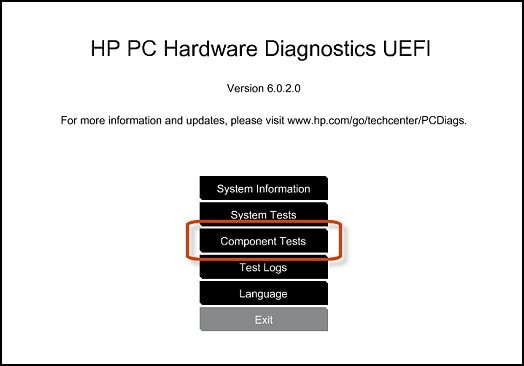
The HP PC Hardware Diagnostics (UEFI) main bill of fare is displayed. Click Component Tests.
Effigy : HP PC Hardware Diagnostics (UEFI) main carte du jour
-
The Component Tests menu displays. Click Audio.
Figure : Component Test card with Audio selected

-
Click Run once to start the examination.
Figure : Audio Playback Test

-
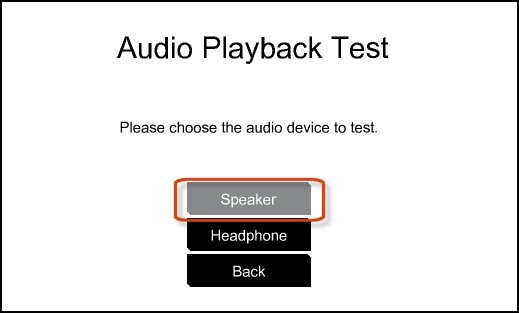
Select Speaker to begin the test.
Figure : Testing the Speaker
-
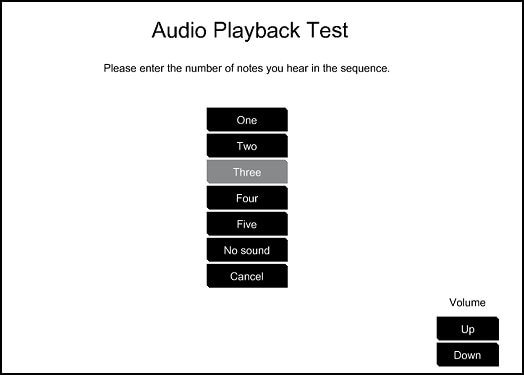
During the examination, a few music notes will be played in sequence and repeatedly. Listen carefully and select the number of notes yous hear in the sequence. If y'all enter a tone number incorrectly, run the test again. If you lot hear nothing, select No sound.
note:
Some HP models take a Book control in the test window. Brand sure you increase the volume level before you brand a music tone pick.
Effigy : Entering the number of notes
-
When the Audio Test is consummate, the results are displayed on the screen.
If the sound test passes, return to the Main menu to exit and restart the calculator.
If the audio fails the tests, a failure ID will be provided. Write downwardly the information so you have it available when you contact HP Customer Support. The information is also bachelor in the Test Logs, on the Diagnostics UEFI primary folio.
Figure : Audio test results

-

How To Update Sound Drivers Windows 8,
Source: https://support.hp.com/us-en/document/c03515411
Posted by: comptonwhicily74.blogspot.com
0 Response to "How To Update Sound Drivers Windows 8"
Post a Comment